The practical difference in one minute
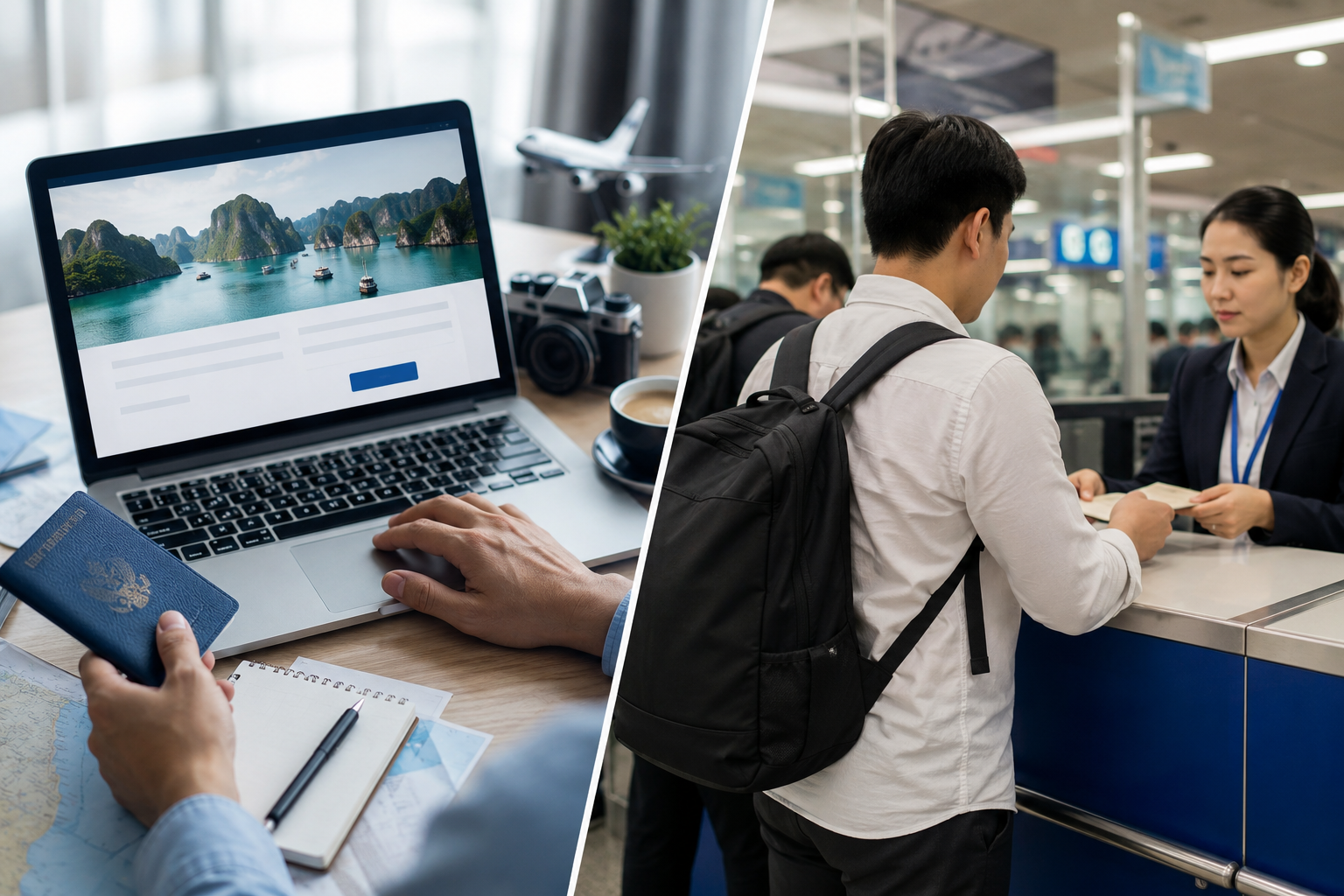
A Vietnam eVisa is a digital visa path completed before travel. The traveler applies online, receives a visa result, and presents the approved document for boarding and entry. Vietnam Visa on Arrival is a different airport-based path: the traveler needs an approval letter before departure, then completes visa stamping after landing at a Vietnam international airport.
eVisa vs Visa on Arrival comparison
| Question | Vietnam eVisa | Visa on Arrival | Vietnam GoEasy note |
|---|---|---|---|
| Where is the visa prepared? | Online before departure. The traveler receives an electronic visa result. | Approval letter before departure, then visa stamp after landing. | Never treat VOA as “show up first, solve later.” Airlines may check documents before boarding. |
| Where can it be used? | Designated international airports, land borders, and seaports that accept eVisa. | International airports only, when the approval-letter route is suitable. | For land or sea entry, eVisa is usually the route to review first. |
| Who is it best for? | Most travelers with enough time before departure. | Selected air-arrival cases, special handling cases, or urgent cases where support confirms feasibility. | For US and Canadian travelers, eVisa is usually the first path unless timing or case details require review. |
| Main documents | Passport bio page, portrait photo, trip details, entry/exit information. | Passport, approval letter, passport photos if required, arrival form, and cash for stamping fee where applicable. | Document quality and exact personal details matter on both routes. |
| Main risks | Wrong name, passport number, date of birth, date range, or unusable photo/passport upload. | No valid approval letter, missing airport documents, insufficient cash, or misunderstanding the landing visa counter. | Small mistakes can create large airport problems. Review early when possible. |
When eVisa is usually the better choice
Choose the eVisa route when your trip is planned, your documents are ready, your travel purpose is ordinary tourism or short business travel, and you can wait for processing before departure. Vietnam’s official tourism guidance states that citizens of all countries and territories can apply for Vietnam eVisas, with a duration of up to 90 days and multiple-entry validity available under the expanded eVisa policy.
Good eVisa situations
- You are flying, crossing by land, or arriving by cruise/seaport through a permitted eVisa port.
- You can prepare a clear passport page and portrait photo.
- You want the visa result before your travel day.
- Your case does not involve unusual passport, purpose, or timing issues.
When to pause and ask
- Your flight is within a very short time window.
- You already submitted an application and it is still pending.
- Your passport details may have been entered incorrectly.
- You are unsure whether your entry point or trip purpose fits eVisa.
When Visa on Arrival may still be relevant
VOA may be relevant for some air-arrival cases where a standard eVisa path is not the best fit or when a traveler needs approval-letter support. However, VOA is not the general default for modern Vietnam travel. It should be treated as a specific airport process that requires review before the traveler pays or flies.
- Review the case first. Confirm nationality, passport type, arrival airport, flight date, and why eVisa may not be sufficient.
- Obtain the correct approval letter. The traveler should not fly expecting a landing visa without a valid approval letter.
- Prepare airport documents. Passport, approval letter, photos/forms if required, and cash for stamping fee should be ready in hand luggage.
- Complete airport stamping. After landing, the traveler follows the landing visa counter procedure before immigration entry.
For US and Canadian travelers
For ordinary passport travelers from the United States and Canada, eVisa is usually the simplest starting point for short tourism or business trips. The main questions are timing, document quality, date range, entry route, and whether the traveler needs single or multiple entries. If the flight is close, if the traveler made a mistake, or if a pending application creates uncertainty, human review becomes more important than choosing a route blindly.
Vietnam GoEasy recommendation
Start with eVisa for normal planned travel. Use support review when timing is tight, when documents are unclear, or when you are considering VOA because of an urgent or special airport case. Vietnam GoEasy can help compare the practical path, but final visa decisions remain with the relevant authority.
Quick rule: choose the route that matches your travel reality
The best Vietnam visa route is not the one that sounds fastest on a website. It is the route that fits your passport, travel date, entry method, number of entries, document quality, and airline boarding situation. For a normal trip planned ahead of time, eVisa is usually the most straightforward. For a last-minute or unusual air-arrival case, an airport-based support path may need to be reviewed.
Travelers often compare eVisa and Visa on Arrival only by price or speed. That can lead to mistakes. The more important comparison is operational: what document will you show before boarding, where will you enter Vietnam, what information must match your passport, and what happens if your case is delayed?
Expanded comparison: eVisa vs Visa on Arrival
| Factor | Vietnam eVisa | Visa on Arrival |
|---|---|---|
| Main document | Electronic visa result issued before travel, normally downloaded and checked before departure. | Approval-letter based path followed by an arrival/stamping step at a Vietnam airport where applicable. |
| Best for | Planned trips, clear passport details, standard tourism/business visits, and travelers who want a document before flying. | Reviewed urgent or special air-arrival cases where a VOA path is confirmed as more suitable. |
| Entry route | Must match eligible eVisa entry/exit ports and the details entered in the application. | Generally airport-focused. Not a default solution for land borders, seaports, or cruise-style routes. |
| Common mistake | Wrong passport number, wrong name order, wrong date, wrong entry port, poor portrait/passport image. | Assuming the airport can fix missing documents, unclear approval letter details, or route mismatch after arrival. |
| Stress point | Waiting for result or discovering an error too close to the flight. | Check-in uncertainty before flying and waiting at the landing visa counter after arrival. |
Examples by traveler type
eVisa is usually the first path to consider. The key is checking passport validity, correct name order, entry port, photo quality, and single/multiple entry need before submission.
The right answer depends on timing, working hours, current application status, and route. Do not choose VOA only because it sounds urgent; ask for a case review first.
If the trip purpose, sponsor, length of stay, or document requirement is unclear, compare eVisa, VOA, and official/embassy paths before paying for any option.
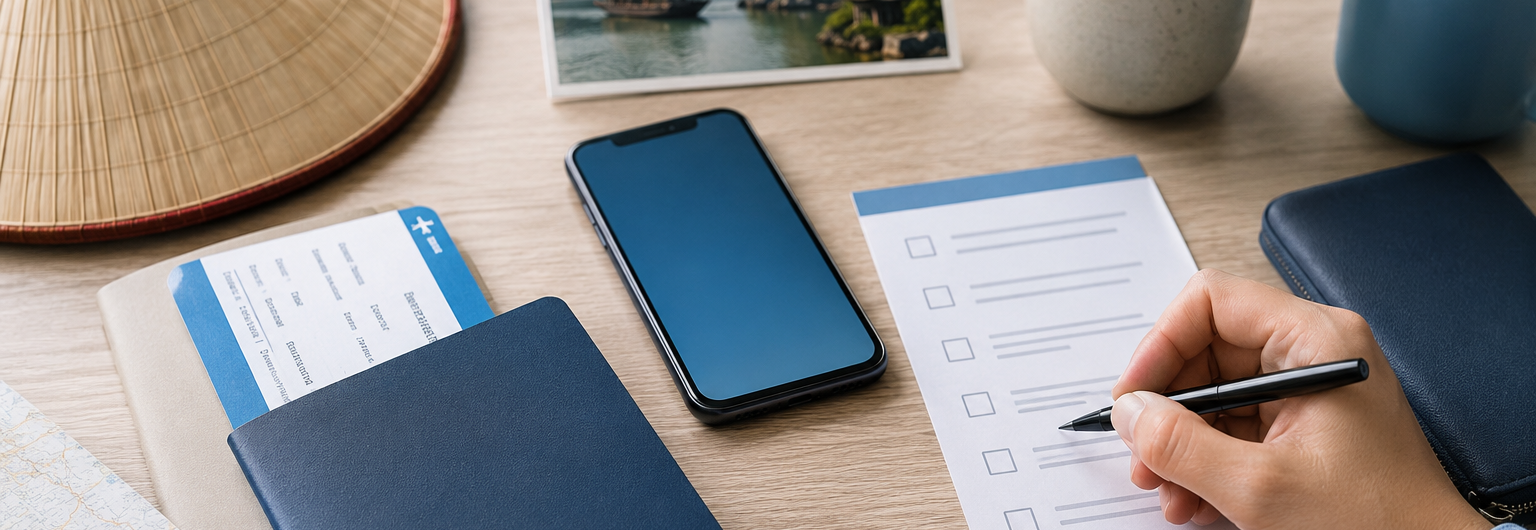
Decision checklist before choosing
More route-comparison questions
For planned trips, eVisa is often cleaner because the traveler receives a document before travel. But “safer” still depends on correct details, correct route, and enough time before departure.
Sometimes a backup path may be reviewed, but it should not be automatic. Your current application status, arrival airport, flight time, and passport details need to be checked first.
For ordinary passport travelers, start by checking whether eVisa fits the trip. If timing is tight or the case is unusual, ask for review before choosing an urgent or airport-based route.
We help travelers understand the likely support path, review practical document details, explain common mistakes, and coordinate private assistance where the case is suitable.
- Document and timing review before moving forward
- Clear guidance for eVisa, VOA, exemption, or embassy-style questions
- Human support by email, WhatsApp, Telegram, or Viber
Final visa approval, airline boarding, border admission, official processing decisions, and airport rules remain outside any private support service.
- No guarantee of approval or entry
- No claim of government affiliation
- No replacement for official requirements or authority decisions
Need help choosing the right route?
Send your nationality, arrival date, entry airport or border, current visa status, and travel purpose. A support team member can review whether eVisa, urgent eVisa support, or an airport-based route is more realistic.
Ask Support FirstSend your nationality, passport country, travel date, entry route, and current visa status. Vietnam GoEasy can help you understand whether eVisa support, VOA guidance, airport assistance, or an official/embassy path is more realistic.